Address
P.O.BOX 2964,
Block A, Sweya
Mwanza, Tanzania
info@emedo.or.tz
Work Hours
Monday to Friday: 8AM - 5PM
Address
P.O.BOX 2964,
Block A, Sweya
Mwanza, Tanzania
info@emedo.or.tz
Work Hours
Monday to Friday: 8AM - 5PM


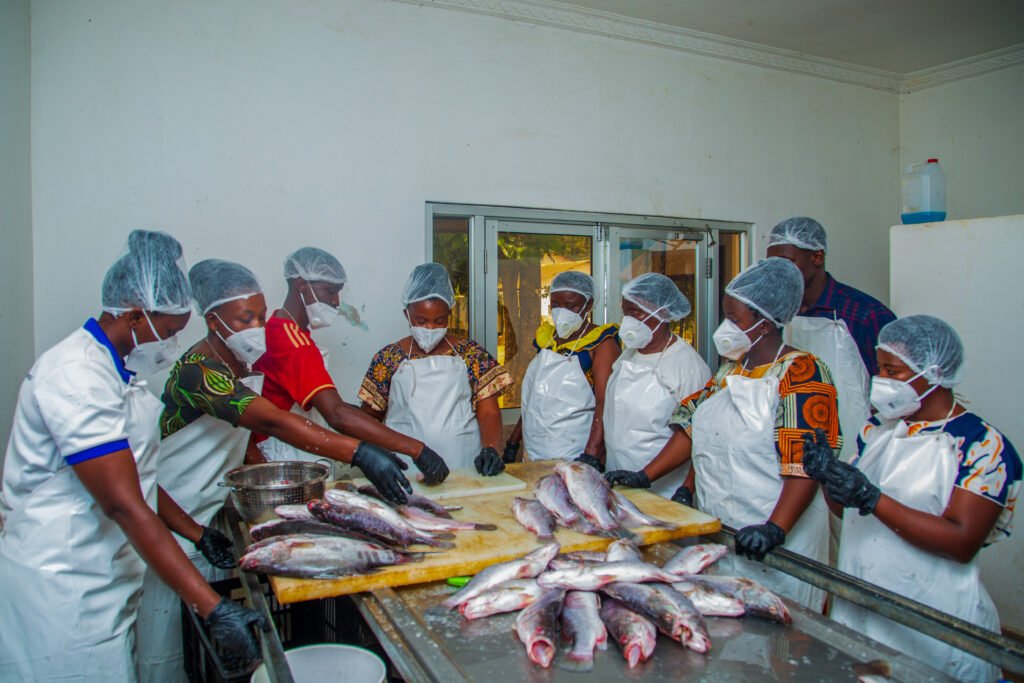
The journey of fish from the lake does not end with the catch. For women engaged in fish processing, the way fish is prepared, transformed, and presented to consumers can unlock new economic opportunities, improve livelihoods, and increase the value of fisheries products.
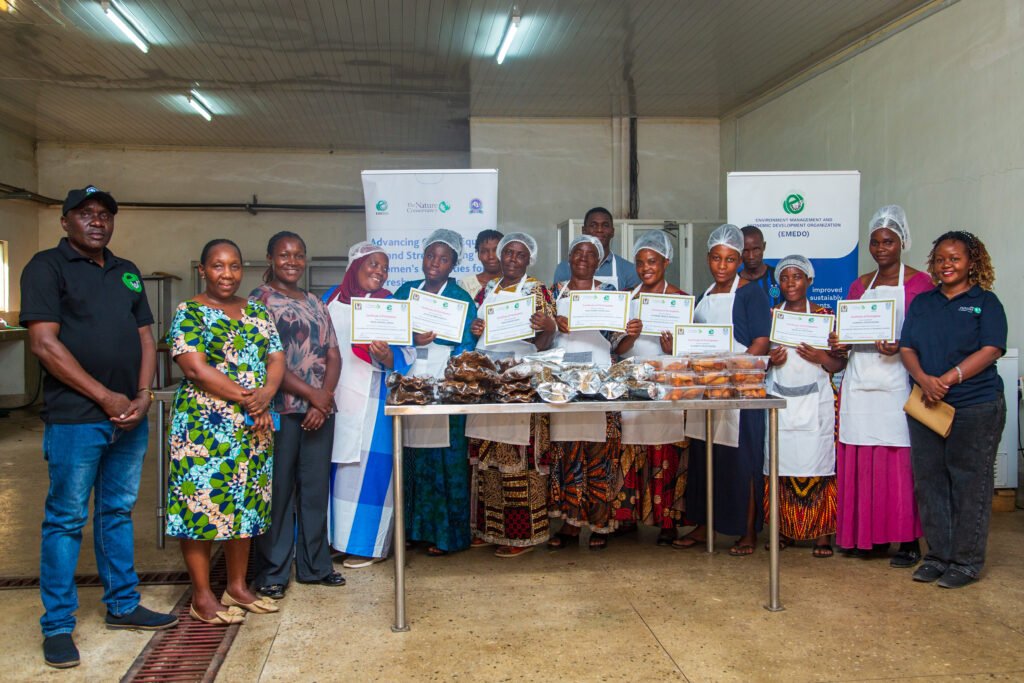
Recognizing this potential, the Environmental Management and Economic Development Organization (EMEDO), with support from The Nature Conservancy (TNC), organized a two-day practical fish value addition training for women fish processors from the TAWFA Lake Tanganyika Zone, representing Kigoma, Katavi, and Rukwa regions. The training took place on 20–21 October at the Fisheries Education and Training Agency (FETA), Nyegezi, Mwanza.
The training aimed to strengthen women’s capacity to diversify fish products, improve processing practices, and explore better market opportunities through value addition.
The sessions were facilitated by EMEDO staff, Mrs. Lucyphine Kilanga, Gender and Women Empowerment Lead Officer, and Mr. Lawrence Kitogo, Environmental Officer. Practical sessions were conducted by Mrs. Elizabeth Vincent Lukindo, a fish technology trainer from FETA, who guided participants through different techniques of transforming fish into marketable products.
Moving beyond conventional fish processing, participants gained hands-on experience in preparing a variety of products, including smoked fish, fish fingers, fish rolls, fish balls, samosas, and other fish-based products. They also strengthened their understanding of fish quality, appropriate ingredients, hygiene, food safety, packaging, and product presentation.

Speaking after the training, Mrs. Elizabeth Vincent Lukindo emphasized the economic potential of using fish fillets to develop diverse products.
“Through fish fillets, women processors can produce different products such as snacks, cakes, and other fish-based products. This creates opportunities to increase the value of fisheries products. Value addition goes beyond producing new products; it also involves proper packaging, labelling, and maintaining good hygiene throughout the preparation process.”
According to Mrs. Lukindo, these improvements could help women access more reliable markets and increase their incomes through better-quality and diversified products.
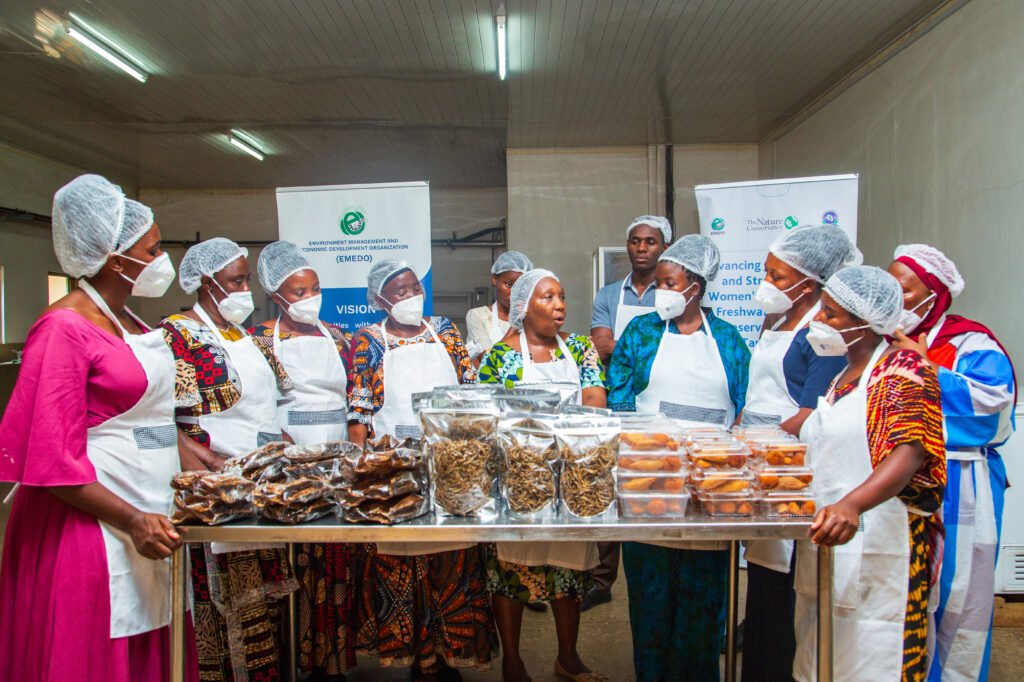
For the women who participated, the training was more than an opportunity to learn new processing techniques. It offered practical knowledge they could apply to improve their businesses and create additional value from the fish products they already trade.
Mrs. Mgeni Mgisha, a beneficiary from Rukwa Region, described how the training had changed her perspective on the commercial value of dagaa. “The training has given me important skills that I can use to add value to dagaa. Previously, I sold a kilogram of dagaa for TZS 15,000. With the improved preparation and quality packaging skills I have gained, I am now looking forward to selling at TZS 20,000 or even TZS 25,000 per kilogram.”
Her experience demonstrates how improved processing and presentation can create opportunities for women to obtain better prices for their products.
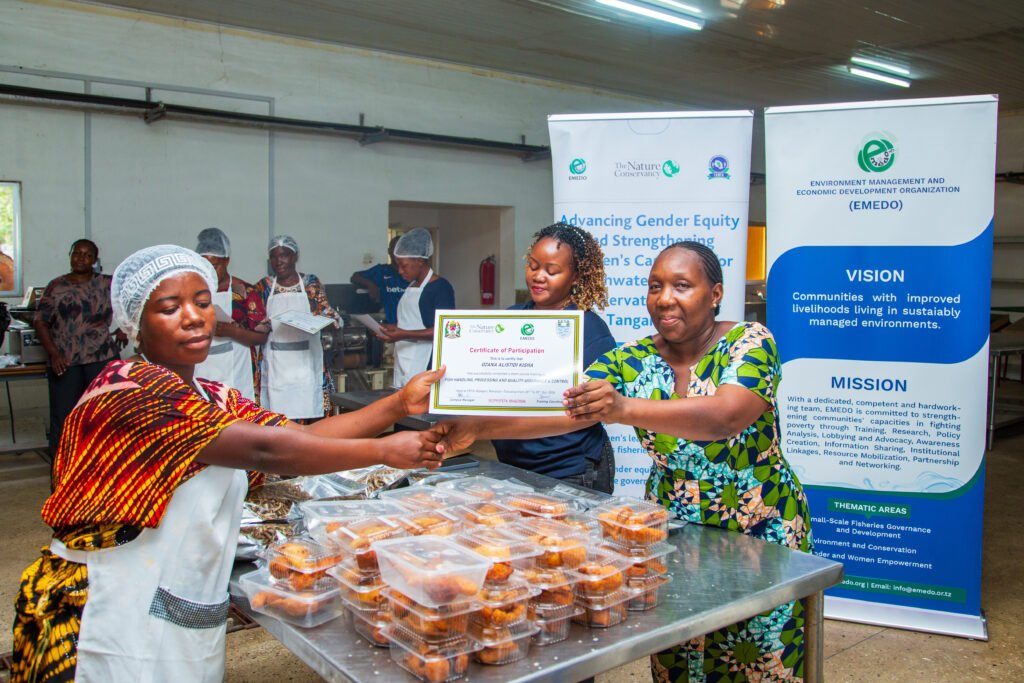
At the conclusion of the two-day training, participants received certificates of participation in recognition of their engagement and commitment throughout the sessions.However, the greatest outcome extends beyond the certificates. The women returned with practical knowledge, new processing techniques, and ideas they can share within their respective groups and apply to their businesses.
Through this initiative, EMEDO, with support from TNC, continues to contribute to strengthening women’s economic empowerment and participation in the fisheries value chain around Lake Tanganyika. By equipping women fish processors with practical value addition skills, the initiative seeks to create opportunities for diversified fish products, improved product quality, stronger market competitiveness, and better livelihoods.
EMEDO extends its appreciation to all participating women fish processors for their active involvement and commitment to learning, as well as to FETA for facilitating the practical training. Special appreciation goes to TNC for its continued support towards advancing women’s empowerment and sustainable fisheries management.
Because the value of fish is not only in what is caught, but also in what women can create from it.