Address
P.O.BOX 2964,
Block A, Sweya
Mwanza, Tanzania
info@emedo.or.tz
Work Hours
Monday to Friday: 8AM - 5PM
Address
P.O.BOX 2964,
Block A, Sweya
Mwanza, Tanzania
info@emedo.or.tz
Work Hours
Monday to Friday: 8AM - 5PM
For many women engaged in fish processing, growing a business is not only about having access to fish or better processing skills; it also requires access to reliable and affordable capital. Yet, limited access to finance often forces women to depend on informal lenders whose high interest rates can make business growth and loan repayment difficult. Through Village Community Banks (VICOBA), women fish processors are building an alternative: saving together, accessing affordable loans, and investing in their own economic future.
Recognizing the importance of financial inclusion in strengthening women’s economic empowerment, the Environmental Management and Economic Development Organization (EMEDO), with support from The Nature Conservancy (TNC), has been strengthening the financial management capacity of women fish processors under the TAWFA network through practical VICOBA training in Uvinza, Kigoma Region, and Nkasi, Rukwa Region.
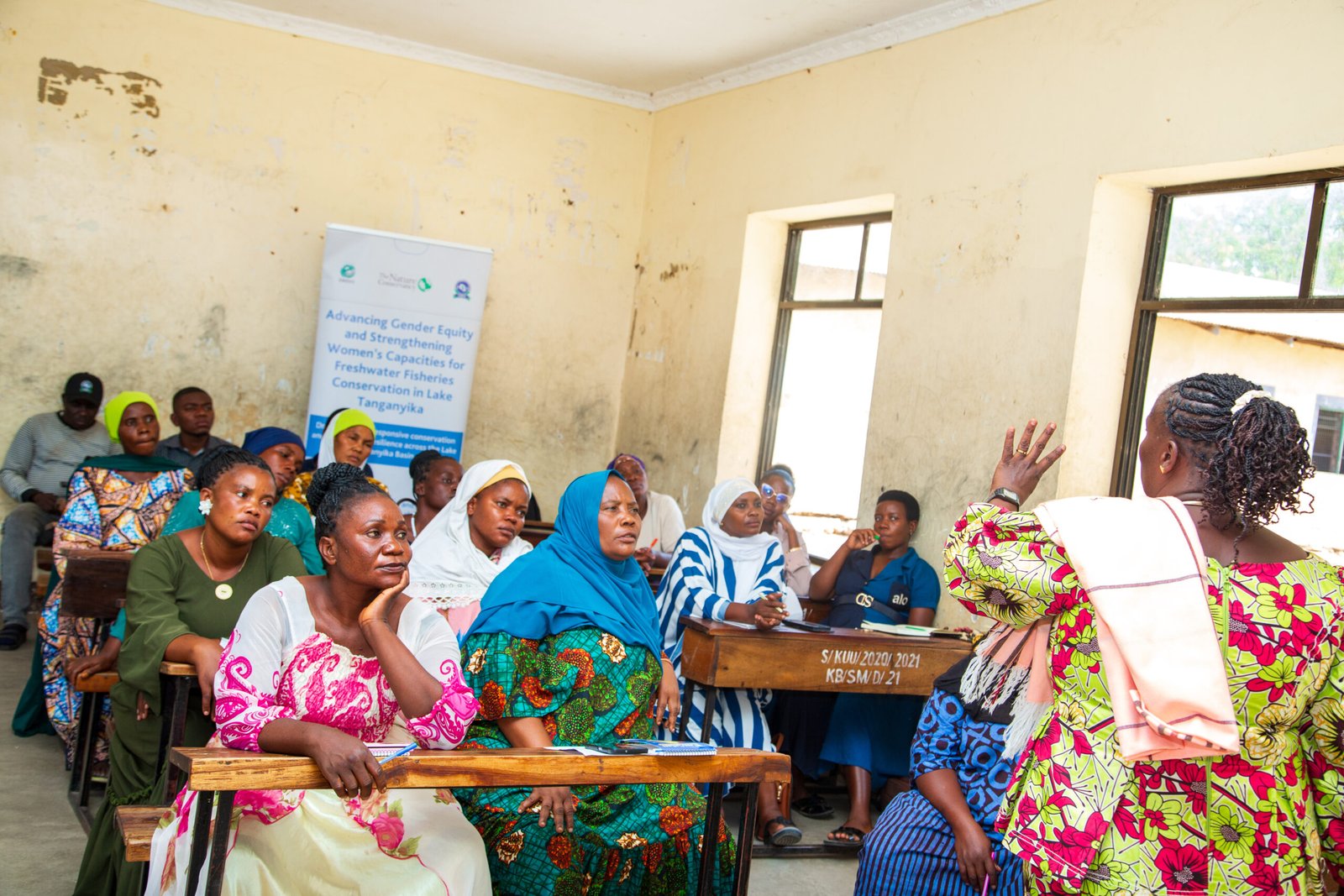
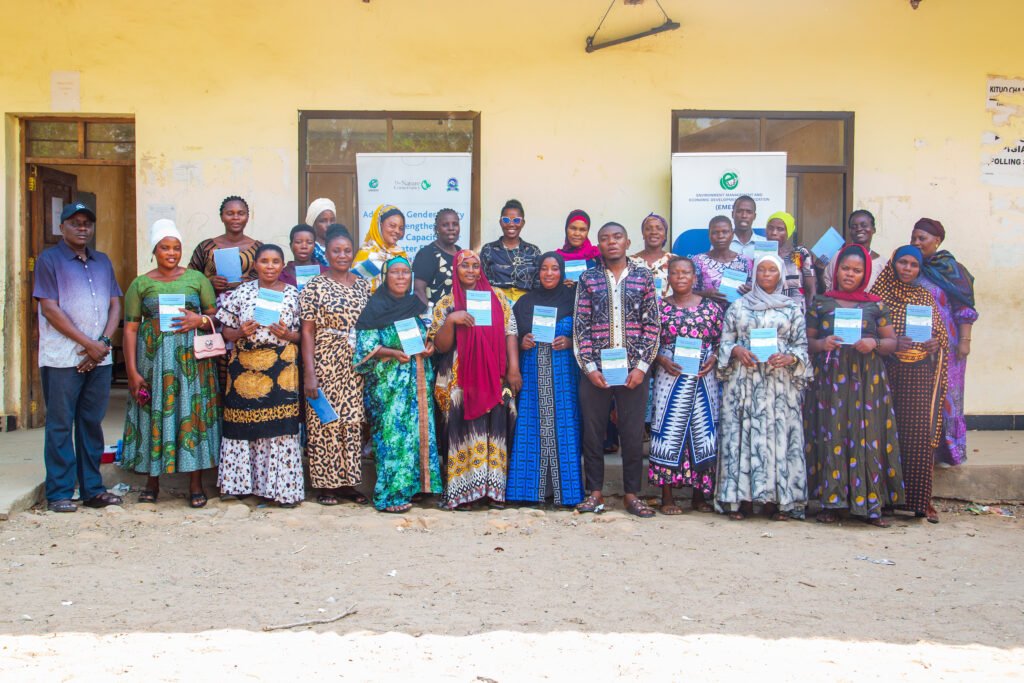
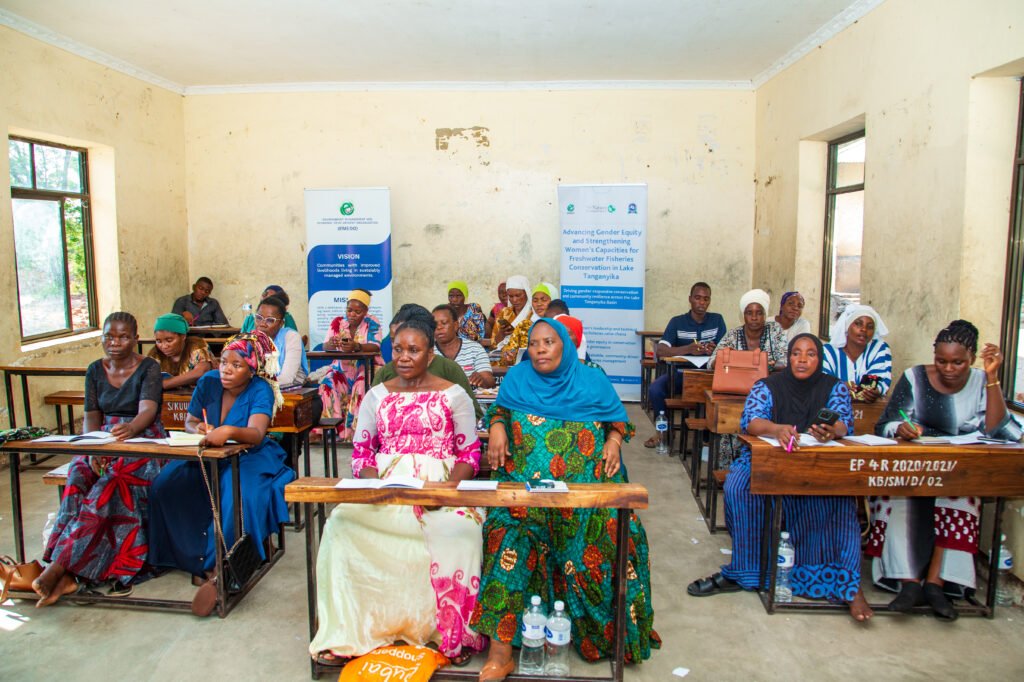
The trainings, conducted on 21–22 August in Uvinza and 27–28 October in Kabwe-Nkasi, brought together women fish processors to acquire practical skills in establishing and managing community-based savings groups, creating opportunities for them to mobilize their own financial resources and invest in their businesses.
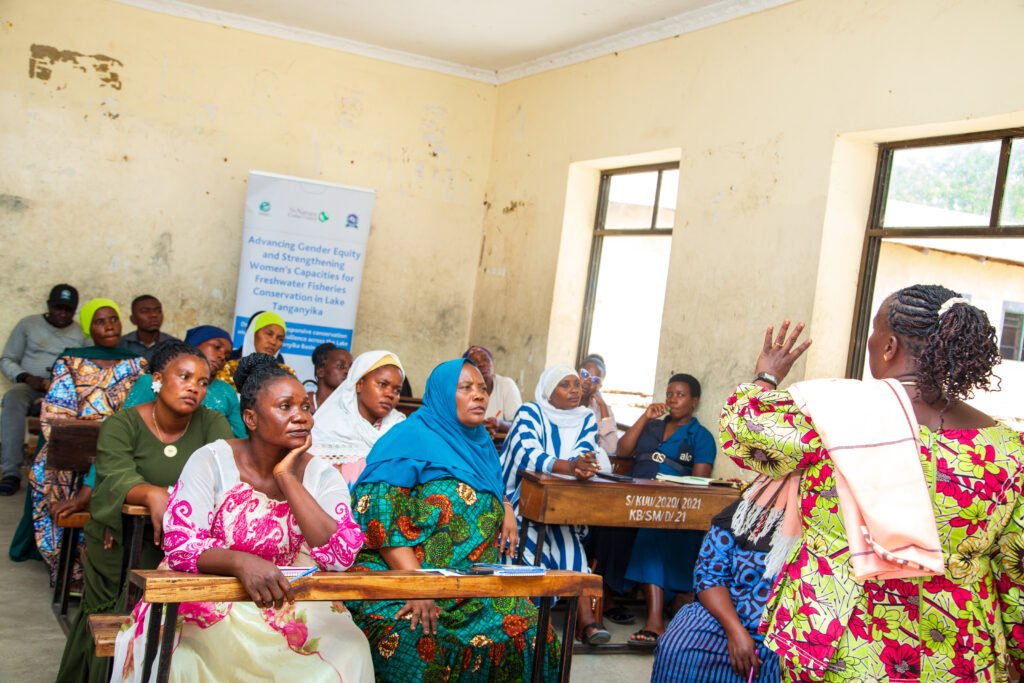
Facilitated by Ms. Jovitha Justin, a Community-Based Savings Groups (CBSG) trainer from TAWFA, Kagera Region, the sessions combined theoretical learning with practical exercises. Participants learned how to establish and manage savings groups, purchase shares, maintain financial records, calculate interest, access and repay loans, distribute profits, and strengthen group leadership.
These skills are particularly important for women whose businesses often require working capital to purchase dagaa, acquire processing materials, improve product quality, and meet other investment needs.
Through collective savings, women can gradually build a common fund from which members can borrow according to agreed group procedures. This creates an opportunity to access financial resources without relying entirely on costly informal borrowing.
For women in Kabwe-Nkasi, the training introduced a practical way of turning small, regular savings into business capital. Speaking after the training, Ms. Asha Masoud, Chairperson of Tuinuane Group in Kabwe and a dagaa processor, explained how the knowledge had changed her understanding of financial management.
“Through this training, I have learned how to manage and save money through VICOBA. Previously, we did not understand the importance of saving and purchasing shares through VICOBA. These savings will help me build sufficient capital to develop my dagaa processing activities.”
Her experience reflects an important opportunity for women processors: instead of waiting for external financial assistance or depending on high-interest lenders, they can organize themselves, save collectively, and gradually build the capital needed to strengthen their businesses.
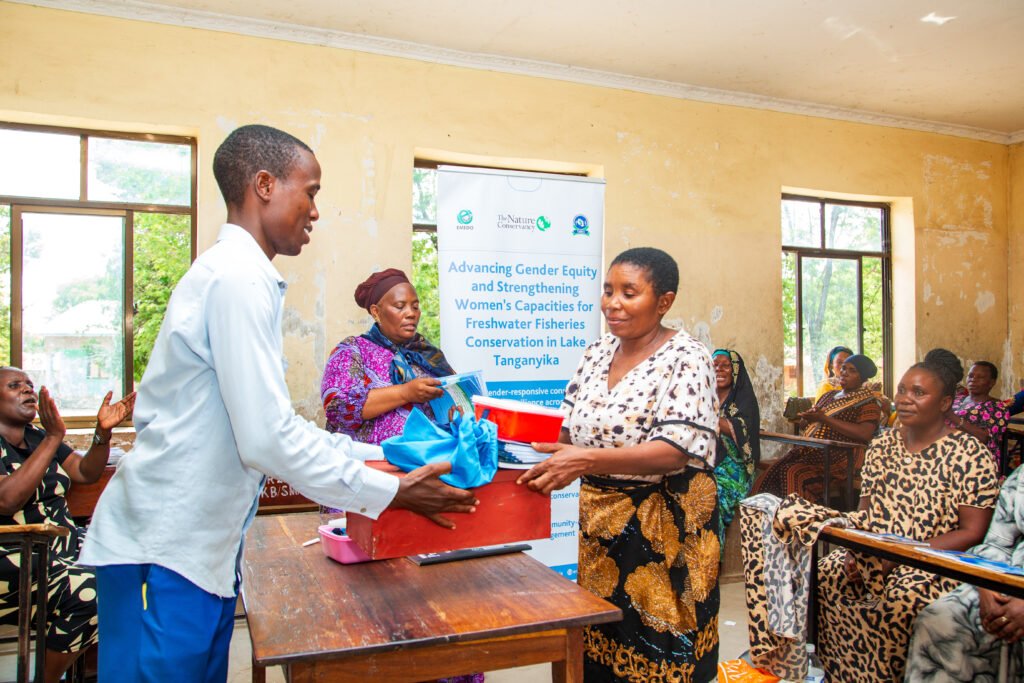
To ensure that the acquired knowledge translates into effective group operations, EMEDO supported the participating women’s groups with VICOBA operational materials. The support included share-recording books, share and community stamps, VICOBA constitutions, iron cash boxes, and other accounting materials to facilitate transparent financial management, record-keeping, and accountability within the groups.
Providing these materials alongside practical training helps bridge the gap between learning how savings groups operate and putting that knowledge into practice. With the necessary skills and operational tools, participating women are better equipped to manage their groups, maintain financial records, monitor contributions, and administer loans in accordance with their agreed group rules.
The importance of VICOBA extends beyond access to business capital. When women have greater control over financial resources, they gain more opportunities to make economic decisions, strengthen their household financial security, and participate meaningfully in community development.
For women fish processors around Lake Tanganyika, stronger financial capacity can also support improvements in fish processing, product diversification, and business sustainability. It creates a stronger economic foundation from which women can participate in fisheries management discussions and contribute to the conservation of the freshwater resources that sustain their livelihoods.
Through these interventions, EMEDO, with support from The Nature Conservancy (TNC), continues to advance gender equity and strengthen women’s economic empowerment and participation in the conservation of Lake Tanganyika’s fisheries resources.
Because when women save together, they build more than financial capital; they build stronger businesses, greater independence, and opportunities for a more sustainable future.
