Address
P.O.BOX 2964,
Block A, Sweya
Mwanza, Tanzania
info@emedo.or.tz
Work Hours
Monday to Friday: 8AM - 5PM
Address
P.O.BOX 2964,
Block A, Sweya
Mwanza, Tanzania
info@emedo.or.tz
Work Hours
Monday to Friday: 8AM - 5PM



A collaborative effort by EMEDO to address unfair trading practices in the dagaa market has helped bring the concerns of women fish processors to the attention of government authorities, contributing to an official directive aimed at ending kilogram deductions and promoting fairer trading practices in Kigoma Region.
For many women engaged in dagaa processing and trading around Lake Tanganyika, taking their products to market should be an opportunity to earn income from their hard work. However, persistent disputes over kilogram deductions and additional charges imposed during sales have continued to undermine their earnings and create tensions between women processors and market brokers.
Recognizing the impact of these practices on women’s businesses EMEDO, through its project on advancing gender equity and strengthening women’s capacity in the conservation of Lake Tanganyika’s fisheries resources, funded by The Nature Conservancy (TNC), supported efforts to address the challenge through stakeholder engagement and dialogue.
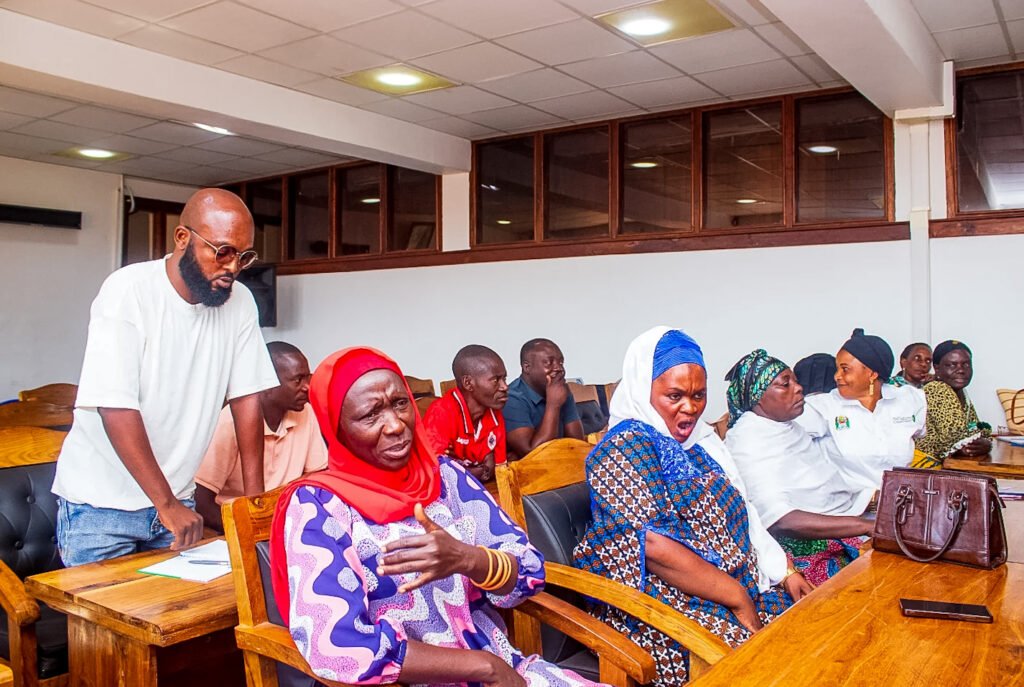
Following an initial engagement organized by EMEDO in April 2026, the issue attracted the attention of government authorities, leading to a stakeholder meeting convened by the Kigoma Regional Administrative Secretary’s (RAS) Office. The meeting brought together women fish processors, Beach Management Unit (BMU) leaders, fisheries officers, market brokers association representatives, and the Regional Trade Officer to discuss the ongoing issue and identify solutions that would ensure fairness for all parties involved.

During the meeting, women fish processors raised concerns over deductions of approximately four kilograms from every 100-kilogram sack of dagaa sold, alongside an additional charge of TZS 500 per kilogram sold. They argued that these practices significantly reduce their earnings and place an unfair burden on their businesses.
Sharing her experience, Ms. Angelina Augustino, a fish processor from Kigoma, explained how the practice had affected her sales. “I once went to the market with 50 kilograms of dagaa to sell. However, the buyer asked me to leave two kilograms so that I would only be paid for 48 kilograms. I refused, and the buyer also declined to purchase my dagaa. We are asking that when we weigh 50 kilograms, we should be paid for all 50 kilograms.”
On their part, the brokers association explained that the deductions were intended to compensate for the weight reduction that occurs when dagaa that are partially dried well undergo further drying after purchase. They maintained that some women bring dagaa to the market before they are sufficiently dried, creating disagreements over the final weight.
Mr. Machumu Hamis Yenga, a leader of dagaa and fish traders at Masanga Market, representing the brokers association, acknowledged the deductions but emphasized the importance of proper drying before products are brought to market.
“It is true that we deduct kilograms at the market. However, the main reason is that some dagaa are not completely dry. When buyers purchase dagaa while they still contain moisture, they request an allowance of four kilograms for every 100 kilograms to compensate for the weight lost during drying. We ask the government to direct women processors to ensure their dagaa are properly dried before bringing them to the market. If the dagaa are not dry, they should not be brought for sale. As market leaders, we are ready to ensure that properly dried dagaa are sold without kilogram deductions.”
The discussion provided an opportunity for both parties to explain their concerns, while stakeholders questioned the legal basis for the deductions and the legitimacy of brokerage arrangements. Participants emphasized the need for government intervention and a transparent trading system that protects the interests of both processors and buyers without disadvantaging either party.
One of the significant outcomes of this engagement was the attention given to the legal and regulatory framework governing dagaa trading. Following the meeting, the Kigoma Regional Administration issued an official directive dated 24 June 2026, addressed to district and municipal authorities across the region, calling for the cessation of kilogram deductions in dagaa transactions.
The directive instructed authorities to ensure that dagaa trading follows applicable laws, regulations, and procedures. It specifically called for an assessment of the legitimacy of brokerage services provided by brokers who receive dagaa consignments and sell them to buyers on behalf of processors. Importantly, the directive emphasized that kilogram deductions from dagaa owners and buyers should stop, and that transactions should instead be conducted based on prevailing market prices rather than brokers receiving dagaa for free through imposed deductions.
The government further referenced Section 84(1) of the Fair Competition Act, Cap. 285, noting that such practices can disadvantage and undermine the economic progress of women processors and fish traders. This formal government response marked an important step towards addressing the concerns raised by women processors and establishing a more accountable trading environment.
Beyond addressing kilogram deductions, stakeholders agreed on additional measures to prevent similar conflicts and strengthen the dagaa market environment. These included continued government follow-up on the dispute, assessing the legal status of brokerage operations, improving the quality of dagaa through proper drying and processing practices, and exploring online market opportunities to expand access to buyers.
These measures recognize that sustainable solutions require responsibility from all parties. While women processors need to maintain appropriate product quality and drying standards, market intermediaries must operate within the law and ensure that their services do not undermine the earnings of producers.
For EMEDO, this engagement demonstrates the importance of connecting women’s concerns with the institutions responsible for addressing challenges within the fisheries value chain.The process, which began with dialogue between women processors and brokers in April, has progressed to government engagement and an official directive addressing the disputed market practices.
Through its project, supported by The Nature Conservancy (TNC), EMEDO continues to promote gender equity, strengthen women’s participation in fisheries management, and improve the economic environment in which women fish processors operate around Lake Tanganyika.
By bringing stakeholders together, supporting constructive dialogue, and encouraging institutional action, the initiative is contributing to a more transparent, accountable, and inclusive fisheries market.
Because empowering women in fisheries is not only about strengthening their processing skills and businesses; it is also about ensuring they operate in a fair market where their hard work is valued, their rights are respected, and their economic opportunities are protected.
